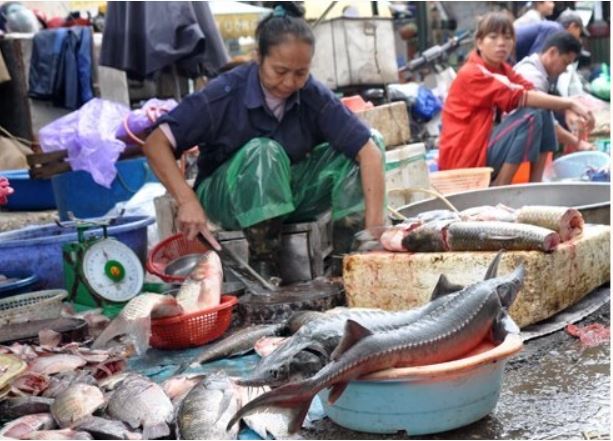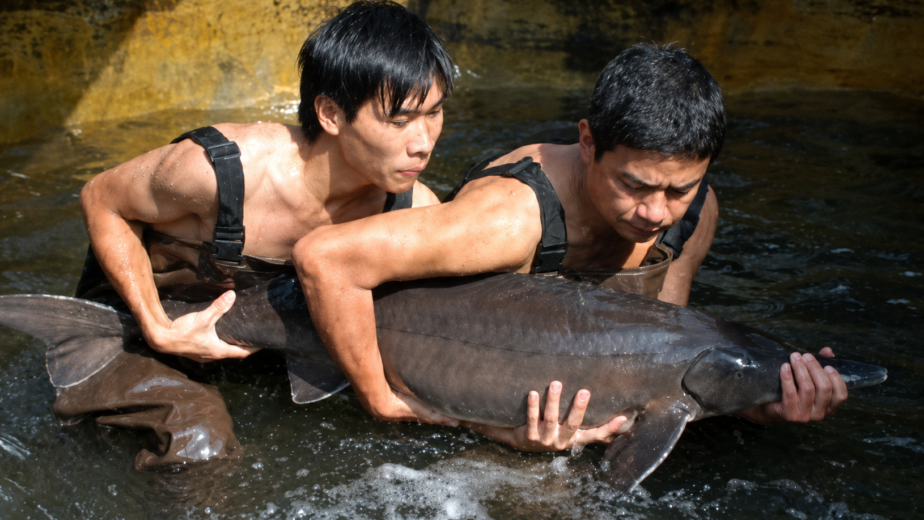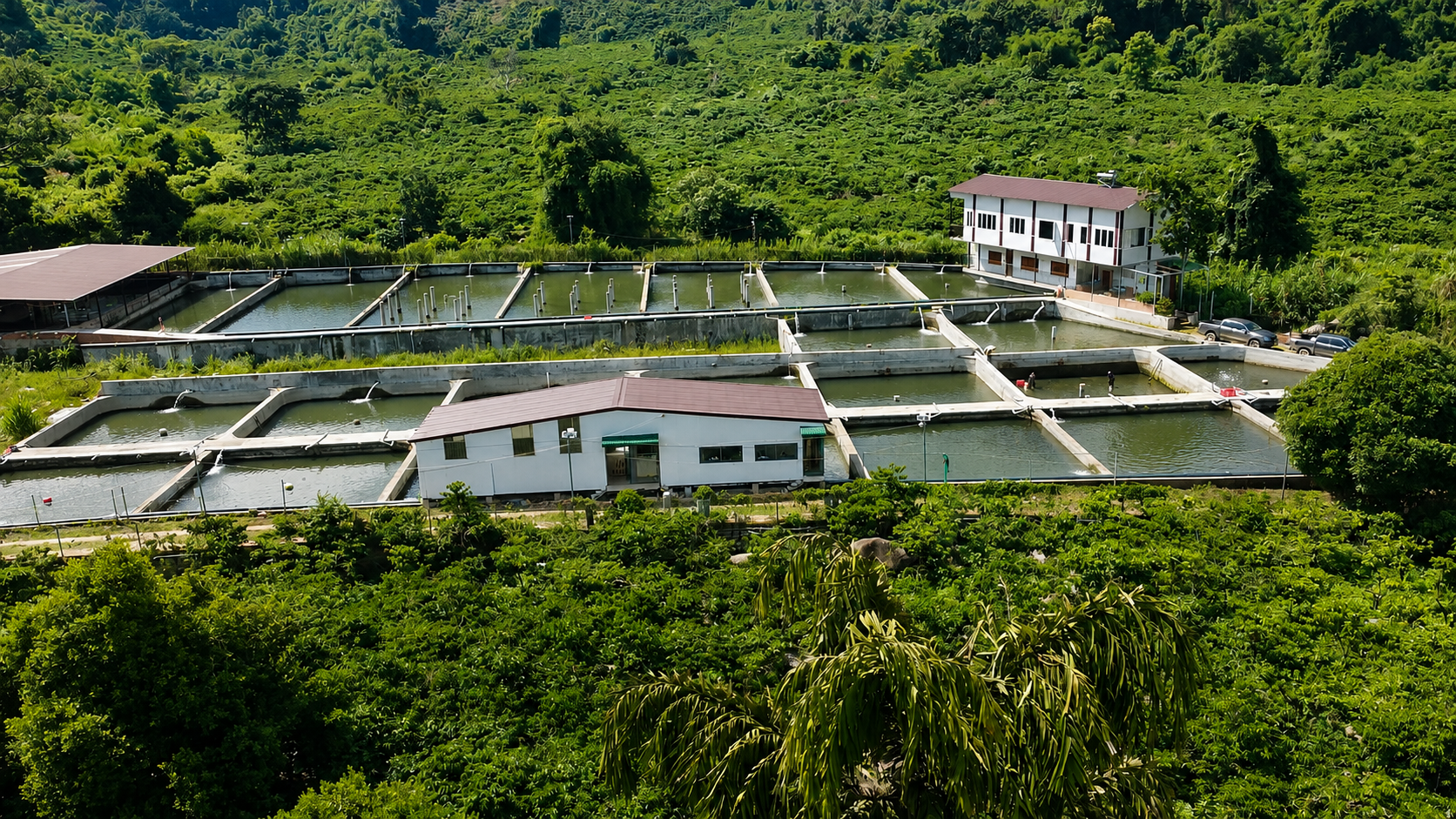
Dr. Nguyễn Trọng Cử’s Viet Duc Trading and Investment Company Limited is implementing a project titled “Application of Scientific and Technological Advances in Rainbow Trout Seed Production in Lao Cai.” The project introduces triploid breeding technology to accelerate growth and extend the fish’s growth period.
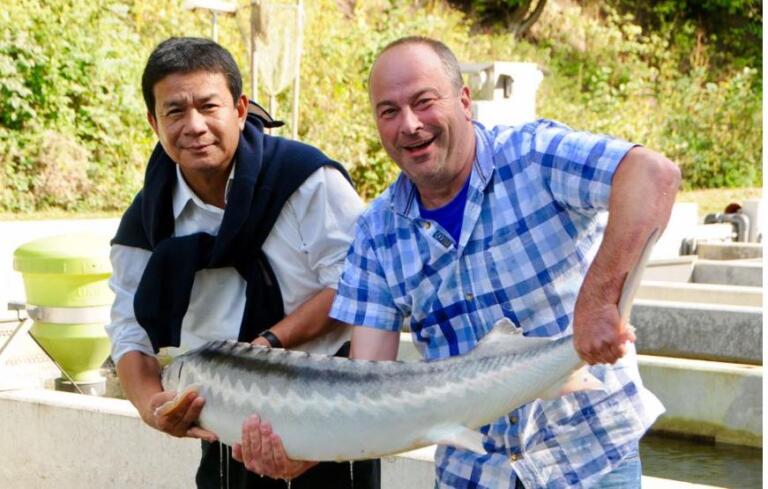
Nhadautu.vn sat down with Dr. Nguyễn Trọng Cử to learn more about his chosen path.
As a legal professional who spent more than 30 years studying and living in Germany, why did you decide to return to Vietnam at a time when many people were seeking opportunities to work and settle abroad?
Mr. Nguyễn Trọng Cử: There were two reasons for my return. The first was my family. My family is quite special: my wife is German and studied Vietnamese Studies. After graduating, she wanted and decided to spend some time living in the country that had been the subject of her studies and research. She had always hoped that our whole family would return to Vietnam so that our children could experience the cultural traditions of their father’s homeland. In 2000, our family decided to move to Vietnam.
At that time, I felt that if we did not return then, we might never be able to return, and we would never have the experiences we have today. Our children were still young, so it would be easier for them to adapt.
The second reason came from within me. I left Vietnam at the age of 18, having grown up in a rural village in Nghệ Tĩnh. I also wanted to return and see how my homeland and country had developed.
After returning to Vietnam, why did you not continue pursuing a legal career?
Mr. Nguyễn Trọng Cử: In Germany, I worked in the public sector. The nature of legal practice in Vietnam did not suit me. Legal work here mainly involved providing services and handling paperwork, which did not allow me to make full use of my abilities. I only provided legal consultancy to several German companies investing in Vietnam.
What led you to choose agriculture as the field in which to start a business after returning home, specifically sturgeon and salmon farming—a completely new area with no precedent in Vietnam at the time?
I came to sturgeon farming by chance. I had a friend, Dr. Nguyễn Thanh Lưu, former Director of Research Institute for Aquaculture No. 1, who laid the foundation for sturgeon and salmon farming in Vietnam.
During an informal gathering over drinks, Mr. Lưu suggested that I try raising sturgeon and salmon. It was a spontaneous idea, and I agreed. Only afterward did I begin approaching the work systematically, making use of the advantages and experience I had gained while living in Europe.
In 2010, I traveled to Germany with representatives of the Directorate of Fisheries to look for broodstock and seed sources, select an appropriate farming model, and study suitable farming techniques. I then conducted trial farming and officially introduced sturgeon stock into Vietnam at the end of 2010.
What were the main difficulties during the early stages of your business?
Because I was the first person to introduce sturgeon stock into Vietnam, the investment environment at that time was not yet truly favorable. I had to pay a very high “tuition fee” in the form of losses in order to learn how to farm the fish properly. There were many failures.
After so many failures, what experience and key lessons did you gain that eventually helped you succeed in sturgeon farming?
Under Vietnamese conditions, a recirculating system that can raise and lower water temperature depends heavily on electricity. If the power supply is unstable, the risks are extremely high. When the electricity goes out, the pumps stop working. Without the pumps, the water no longer circulates, oxygen levels fall, and the fish may die. The best solution is to rely on a natural gravity-fed water flow whenever possible.
Regarding sturgeon feed, several facilities in Vietnam are now capable of producing feed for grow-out fish. However, feed for juvenile fish and fingerlings still has to be fully imported.
Approximately what percentage of market demand does your sturgeon farming system currently serve?
At present, I mainly supply sturgeon and salmon fingerlings, as well as feed, through sturgeon and salmon farms located in Thác Vàng in Sa Pa, Tam Đảo in Vĩnh Phúc, Đà Bắc in Hòa Bình, and Đà Lạt in Lâm Đồng.
The supply of market-size fish is mainly distributed through my Thác Bạc restaurant network in several provinces and cities, including Lạng Sơn and Hanoi, as well as through a number of other restaurants.
Which countries have you exported your products to?
Exporting also requires compliance with many strict conditions. At present, the company has exported fish fingerlings to Laos and Thailand. The exports to Thailand have mainly been ornamental fish.
Has illegally imported sturgeon from China placed your farms in a difficult situation? What has enabled your company to survive until today?
For a long period, many sturgeon and salmon farmers in Vietnam went out of business. Only I and a few other farmers were able to remain in operation.
Our key advantage is a closed-loop business model, supplying clean fish directly from the farm to the dining table.
Transporting sturgeon from Móng Cái or Lào Cai to Ho Chi Minh City involves very high costs. This is also a challenge for illegally imported sturgeon. We have an advantage because we operate a sturgeon farm in Lâm Đồng, allowing us to serve customers in southern Vietnam more efficiently.
Sturgeon roe, or caviar, is known as “black gold on the dining table” and is very expensive. Have you considered farming sturgeon for roe to supply the domestic market and for export?
Of course. That is one of our future development directions. In Hòa Bình, I have a very large broodstock population, including highly valuable Beluga sturgeon, which is often referred to as the “King of Sturgeon.”
Could you share more about the project you are currently implementing?
We are currently carrying out a project titled “Application of Scientific and Technological Advances in Rainbow Trout Seed Production (Oncorhynchus mykiss) in Lào Cai.”
The technology for producing triploid rainbow trout was developed by the Finnish Game and Fisheries Research Institute, which is now part of the Natural Resources Institute Finland.
Rainbow trout were introduced into Vietnam more than 15 years ago through the research project “Research on the Application of Commercial Farming Technology for Rainbow Trout and Sturgeon,” with the objective of raising the fish for meat and roe production.
More than 15 years after rainbow trout were introduced into Vietnam, commercial farming technologies have been published and gradually improved. However, these technologies have mainly focused on grow-out farming based on imported fingerlings, without establishing a reliable domestic seed supply. As a result, the efficiency of rainbow trout farming in Vietnam has remained limited.
Rainbow trout naturally migrate upstream to reproduce when they reach sexual maturity. Therefore, without measures to delay maturation and extend the growth period, the fish may mature and die because they are unable to spawn under artificial farming conditions.
To address this issue, the project will introduce triploid breeding technology to increase growth rates and extend the growth period. The fish will mature and spawn later, allowing them to be raised to a larger market size.
The project will transfer three technologies to Vietnam:
Triploid rainbow trout production technology
Commercial rainbow trout farming technology
Smoked rainbow trout processing technology
These are advanced technologies with technical standards superior to those currently available domestically. Given the climate and environmental conditions of Lào Cai Province, the transfer and application of these technologies are highly suitable.
Triploid rainbow trout grow quickly and are sterile, which allows for a longer farming period. They also have a higher survival rate in commercial production than the diploid rainbow trout currently raised at cold-water fish farms.
Thank you for sharing your insights.