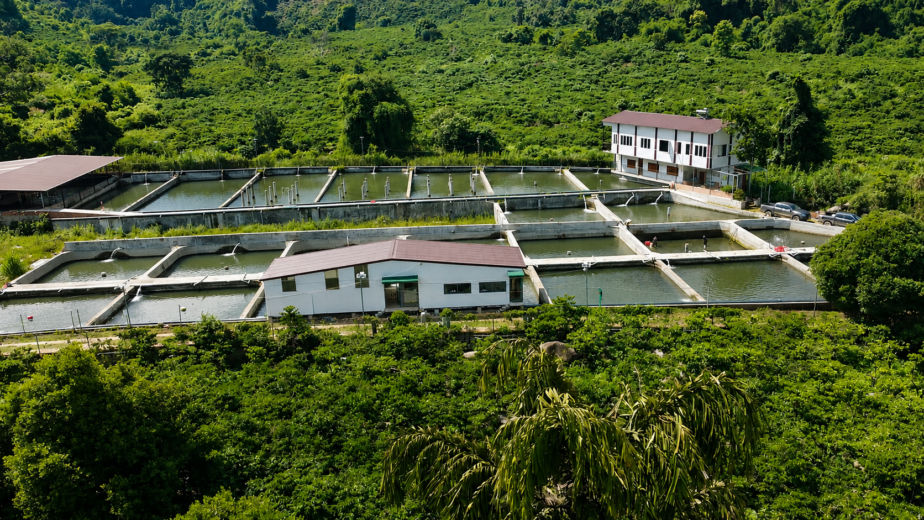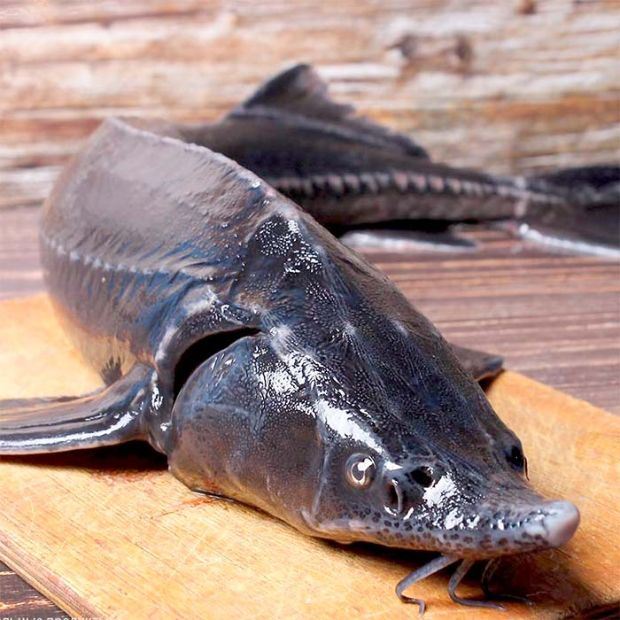
Not only are domestic sturgeon farmers facing pressure from smuggled Chinese sturgeon, but they also encounter many difficulties due to a lack of legal framework.
"Supermarkets in Northern Vietnam mainly sell smuggled Chinese sturgeon."
This information was provided by Mr. Le Anh Duc, Chairman of Vietnam Sturgeon Company, at a press conference with associations and businesses involved in sturgeon farming on the morning of July 7th. He affirmed that major food markets, supermarkets, and even the Metro distribution system in the North largely sell smuggled sturgeon. More specifically, Mr. Duc stated that based on a separate investigation, Metro in the northern region imports 50-70 tons of sturgeon per month, but the region currently has no more than 30-40 tons of domestically produced sturgeon. He added that while the sturgeon at Metro may have origin documents from Lao Cai, the farms there don’t actually raise sturgeon. Furthermore, to confirm that sturgeon from the South is not being sold in Northern supermarkets, Mr. Duc mentioned visiting a sturgeon farm in Bac Giang. This farm only had a few dozen cubic meters of water (enough to raise a few dozen sturgeon), yet they still issued invoices for 3-5 tons of sturgeon per day. Sharing the same view, Mr. Nguyen Trong Cu, Director of Viet Duc Company and the sole supplier of sturgeon in Northern Vietnam, stated: “I, along with a German expert, observed Metro’s sturgeon tank, and I can confirm that these are Chinese sturgeon, as they are a hybrid breed. The long transportation route caused scratches on the fish, which have thin bellies and two streaks of blood running from top to bottom. Vietnamese sturgeon, transported over shorter distances, don’t have such scratches,” Mr. Cu said.
However, in an interview with Thanh Nien newspaper on the afternoon of July 7th, Mr. Khuat Quang Hung, Metro’s media representative, affirmed that the sturgeon in Metro’s warehouse has complete origin documentation and is distributed throughout Metro’s centers as sturgeon from Vietnam.
Thanh Niên Newspaper
Meanwhile, Mr. Tran Van Hao, Chairman of the Lam Dong Coldwater Fish Association, said that Vietnamese sturgeon farming companies can supply 2-3 tons of commercial sturgeon to the market each day, but current consumption is 10-16 tons per day. Therefore, Mr. Hao stated: “This quantity of sturgeon is clearly smuggled, not subject to quarantine or any inspection or control procedures.” Mr. Do Quang Tung, Director of the Vietnamese Agency for the Implementation of the Convention on International Trade in Endangered Species of Wild Animals and Plants (CITES), also confirmed that his agency has never granted import permits for commercial sturgeon to any unit or individual.
Lack of legal basis
Not only is it hampered by smuggled fish, but domestic sturgeon farming is also said to lack a legal basis due to delays in regulations from the Ministry of Agriculture and Rural Development. Vietnam has 27 species of sturgeon that are farmed, but Decision 57 issued in 2008 by the Ministry of Agriculture and Rural Development, which regulates the list of aquatic species permitted for production and business, only includes the Chinese sturgeon. Mr. Tran Van Hao said that the Lam Dong Coldwater Fish Association has submitted a written request to the Fisheries Department of the Ministry of Agriculture and Rural Development to add the species to the list. However, he “doesn’t understand why, despite having farmed sturgeon from Russia for decades, it is still not included in the list of Decision 57.”
According to Mr. Nguyen Huu Dung, Vice Chairman of the Vietnam Association of Seafood Processing and Export, because Vietnam previously did not have sturgeon species, Decision 57 only officially permitted the farming of one species with very low value: the Chinese sturgeon. Currently, businesses are farming other sturgeon species on a trial scale, and if they release them into the market, it would be a violation of the law because there are no regulations governing the circulation of these species domestically.